I Was a Teacher: Homeschool vs Public School and Why I’d Never Choose Public School

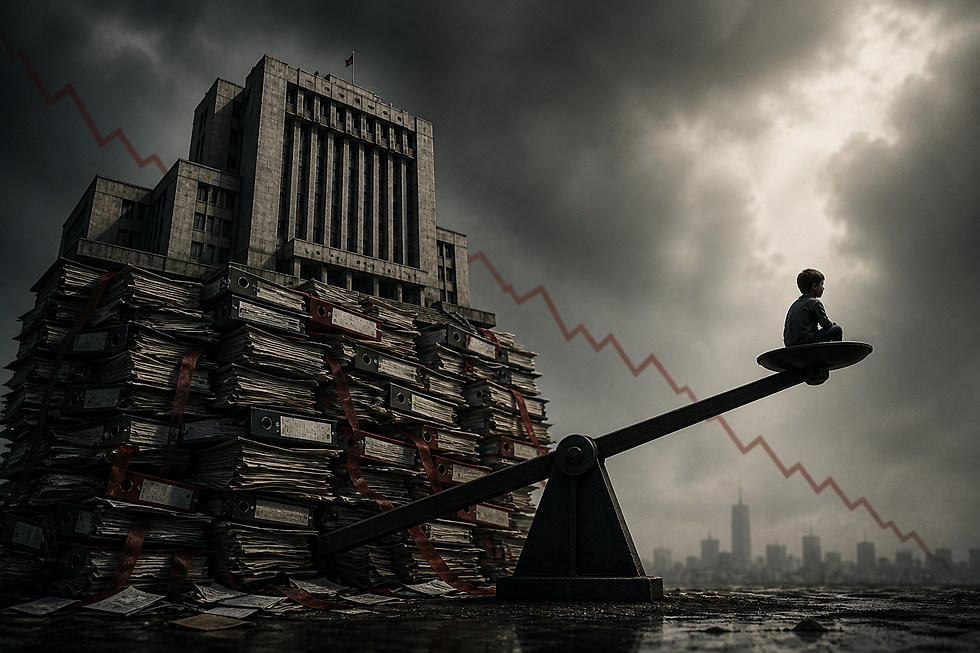
I believed in the system. I defended it. I gave it everything I had. Late nights writing lesson plans, weekends spent grading, and my own money for supplies. Like thousands of other dedicated teachers, I walked into that classroom every day convinced I could make a difference.
But after years inside the system, I can tell you this with absolute honesty: the homeschool vs public school debate isn’t what most parents think it is. What parents imagine happens in schools and what actually happens are two very different realities. This isn’t pulled from headlines or partisan talking points. It’s lived experience from someone who was in the trenches.
The Illusion of the “Full School Day”
On paper, it looks like a solid six or seven hours of learning. Bells ring, kids file in, instruction begins. In reality, the day is shredded from the first minute. Attendance drags on. Morning announcements interrupt. Fire drills, assemblies, counselor pull-outs, and constant behavioral redirections eat up chunks of time. Transitions between subjects chew up another 10–15 minutes each. Even in a well-managed classroom, true instructional time often shrinks to just a few focused hours.
I’ve watched parents react with shock when they pull their kids into homeschooling: “We covered a week’s worth of material in one afternoon.” It’s not magic. It’s the removal of all the friction. No more waiting for 25 other kids to settle. No more announcements about the PTO bake sale. Just focused, uninterrupted learning.
One Teacher, Dozens of Different Needs
Classrooms are built on a factory model: one adult, 25–35 kids with wildly different abilities, backgrounds, and challenges. You’ve got students reading years below grade level sitting next to kids who could be doing high-school work. The teacher’s job? Teach to the middle.
I once had a bright, curious boy who devoured books on his own but was forced to sit through repetitive phonics drills he’d mastered in first grade. Across the room, a girl who needed intensive reading support got the same lesson. Neither got what they truly needed. The system averages everyone out, and the kids at both ends lose.
Behavior Has Become the Primary Job
This is the shift parents rarely see. Teaching content used to be the main event. Now, managing behavior is the full-time occupation.
One disruptive student can hijack an entire lesson. I’ve had days where a single meltdown—screaming, throwing things, refusing to participate—consumed 30–45 minutes of instructional time while the rest of the class sat waiting. Multiply that by multiple students, and consistent learning becomes nearly impossible. Administrative policies often tie teachers’ hands: endless documentation, limited consequences, and a culture that prioritizes “inclusion” over order. The classroom quietly lowers its standards to keep the peace. Learning becomes secondary to crowd control.
Teachers Are Not Free to Teach
The myth is that passionate teachers craft creative, effective lessons tailored to their students. The reality? Strict pacing guides, district-mandated curricula, and standardized testing calendars dictate nearly everything.
I knew when a different approach would reach my students better, more hands-on, more discussion, more time on the concepts they were struggling with. But the schedule said we had to move on to the next unit by Friday. Push too far against that, and you risk poor evaluations or administrative pushback. The system rewards uniformity, not excellence.
When Passing Becomes the Goal
Mastery should be the point. Instead, many schools chase progression. Pressure to maintain graduation rates, attendance numbers, and school ratings means students are often moved forward whether they’ve truly learned the material or not. Deadlines get extended. Retakes become routine. Effort becomes optional.
Kids quickly learn the game: minimum compliance is enough. That mindset doesn’t just hurt test scores, it shapes character.
The Rise of Screen-Based Learning
Devices were supposed to revolutionize education. In practice, many classrooms have become device-sitting rooms. Kids stare at screens for hours, clicking through modules with minimal teacher interaction. Attention spans shrink. Real discussion and hands-on learning fade. Extended screen time isn’t just less effective, it actively trains shorter focus and shallower thinking.
What Parents Don’t Always See About Safety and Special Education
Most schools try. But decisions about fights, bullying, threats, or serious incidents are filtered through layers of liability concerns, reporting requirements, and public-image management. Parents often get a sanitized version.
Inclusion is the dominant model for special education, placing students with significant needs into general classrooms. For some kids, it’s wonderful. For many others, and for the rest of the class, the lack of adequate support staff turns the room into a juggling act. Teachers are expected to differentiate for every need simultaneously with zero extra hands. The result? Targeted help gets diluted, and the overall learning environment suffers.
The Weight of Teacher Burnout
None of this is the fault of the teachers who still show up and care deeply. The problem is the job itself: endless paperwork, emotional labor, scarce resources, and mounting expectations. Burnout isn’t rare, it’s the norm. When dedicated professionals are running on fumes, consistency and excellence inevitably drop.
The Federal Takeover That Changed Everything
None of this happened in a vacuum. In 1979, President Jimmy Carter signed the law creating the federal Department of Education, a cabinet-level bureaucracy that consolidated power in Washington. What followed was an explosion of mandates, standardized testing regimes, compliance paperwork, and top-down “reforms” that treated every classroom like a cog in a national machine.
Local control eroded. Teachers and principals lost flexibility. Meanwhile, inflation-adjusted per-pupil spending has more than doubled since the 1970s, now averaging roughly $16,000 to $18,000 per student nationwide, with total K–12 spending approaching a trillion dollars. Yet long-term NAEP scores in reading and math have remained largely flat for decades, with sharp declines in recent years, especially after 2020, bringing performance to some of the lowest levels seen in decades.
More money. More administrators. More rules. Worse results. That’s not an education system. That’s a bureaucratic machine that prioritizes its own growth over children.
Why So Many Teachers Choose Homeschooling for Their Own Kids
After seeing the system from the inside, thousands of teachers make the same choice: they pull their own children out. Not out of fear, but clarity. Homeschooling gives what the public system structurally cannot:
• Truly individualized pacing
• Minimal disruptions
• Curriculum chosen by parents, not bureaucrats
• A safe, consistent environment free from the daily chaos
• Focused instruction that actually sticks
Homeschool families routinely cover more ground in far less time because they’re not fighting the system, they’re free from it.
A Final Thought for Parents
This isn’t about bashing every school or every teacher. There are still pockets of excellence. Some kids thrive in traditional settings. But the system as it operates today, centralized, bureaucratic, behavior-obsessed, and increasingly screen-dependent, is not the one parents picture when they drop their child off at the bus stop.
Your child only gets one childhood. One shot at those formative years when curiosity, character, and love of learning are either nurtured or crushed. You don’t have to accept the default. You don’t have to hope the system magically improves.
You get to choose what aligns with what you believe is truly best for them.
And once you see what’s really happening inside those walls, the choice becomes a lot clearer.


Comments